By Cedric Brehaut, Chief Product Officer
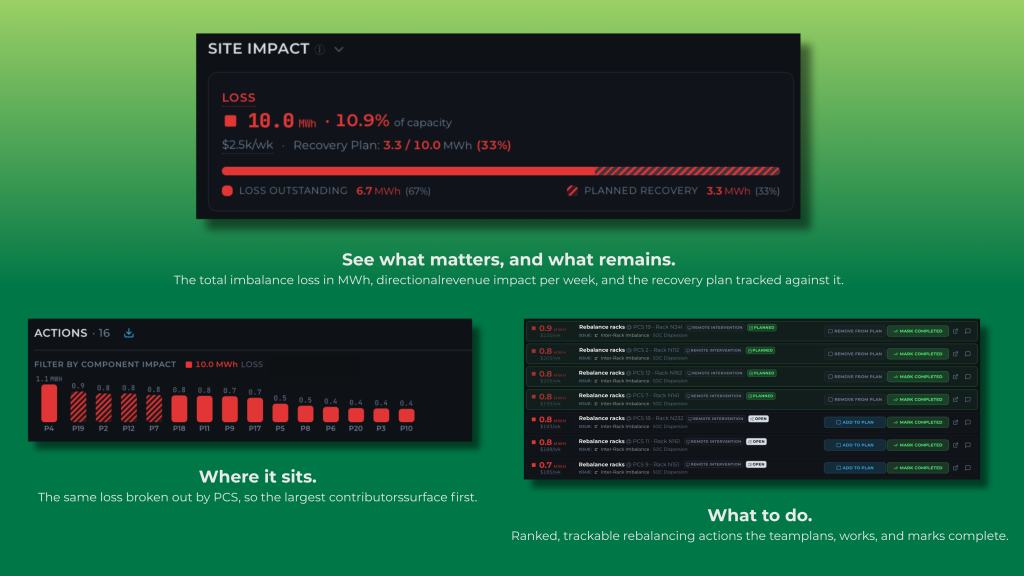
Ask an asset manager what makes managing BESS hard, and the answer usually comes down to knowing which problems matter most, how much energy and value are at stake, and where action will make the biggest difference.
Every intervention competes for limited time, expertise, and budget. Finding a condition is only the beginning; the harder job is deciding what to do first, and being able to justify why.
That gap has shaped how PowerUp is evolving Battery Insight®.
From Detection to Prioritization
Some of us have seen this progression before in telecom and other infrastructure sectors: as instrumentation and analytics make more conditions visible, the operational constraint shifts from detecting problems to deciding what deserves action.
BESS is showing the same pattern. The BMS, EMS and SCADA protect and operate the asset, while advanced analytics reveal a broader range of conditions. But asset managers must still interpret those findings, understand their impact and decide where to focus.
That was the gap we saw in how customers used Battery Insight®: valuable Alarms, but still too much human effort required to turn them into operational priorities.
One Step in a Broader Direction
Our measure of progress is simple: does it help asset managers do their jobs better? That means less time interpreting data, more confidence in what deserves attention, and more time improving asset performance. Our product vision is to make advanced battery analytics useful across the systems, workflows, and partners our customers already rely on.
That principle shapes Decision Support Pack. Its Actions and lifecycle tracking are intentionally lightweight, supporting prioritization, planning and follow-through without replacing customers’ ticketing or work-management systems. As for KPIs and Alarms, Issues, Actions and impact will be made available through exports and APIs as appropriate. Battery Insight® KPIs and Alarms are already available through our API.